We had a chance to go and see one of the world’s deepest canyons that is close by Arequipa called Colca Canyon. A group from the Spanish Institute decided to hike it. Our plans were to hike in one day spend the night at basic cabins and hike out the next morning. Ruth decided that she did not want to try the hike because trail we planned to take descends around 3700 feet.
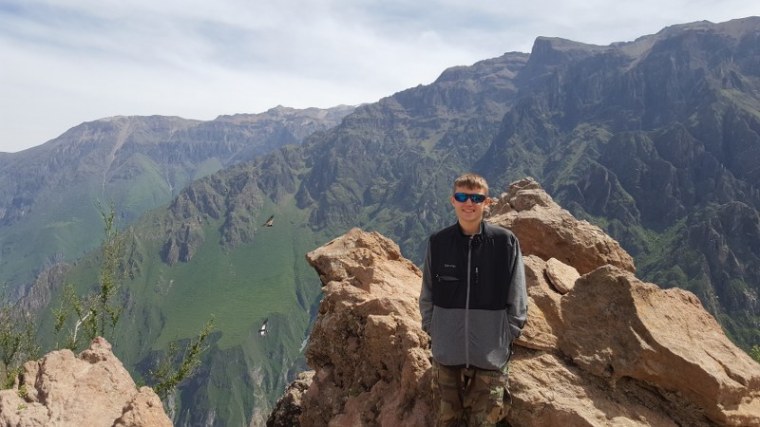
We met to leave at 2:30 am. After 2 hours of collecting others who were taking the tour we left for the 4 hour drive to Colca Canyon. Denver got sick right before we left but after bring up the previous night’s supper, he felt better and wanted to keep going. We arrived around 7:30 and had a quick local breakfast of bread, coffee, and smoothie. We drove another several hours stopping for 15 minutes at a look-out where the Andean Condor, the world’s largest flying bird, is often seen. We saw several in the distance but none close by.
We continued to where the hikers were getting off. Denver was feeling very rough by this time so he and I decided not to continue on the hike, but to return with the bus to Arequipa that evening. The local antidote to nausea is to sniff rubbing alcohol so Denver was constantly sniffing it the whole trip back. After dropping off the hikers we returned to the Condor lookout. When we arrived, there were at least a dozen of them flying close by around the lookout. Their wing span of more than 10 feet make their flight a spectacular sight!
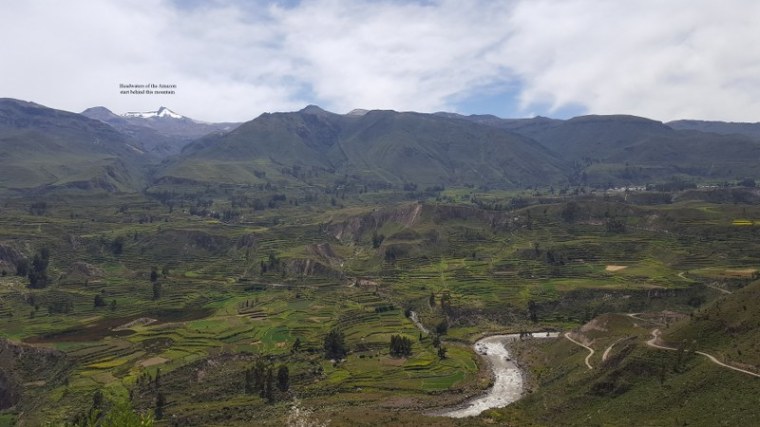
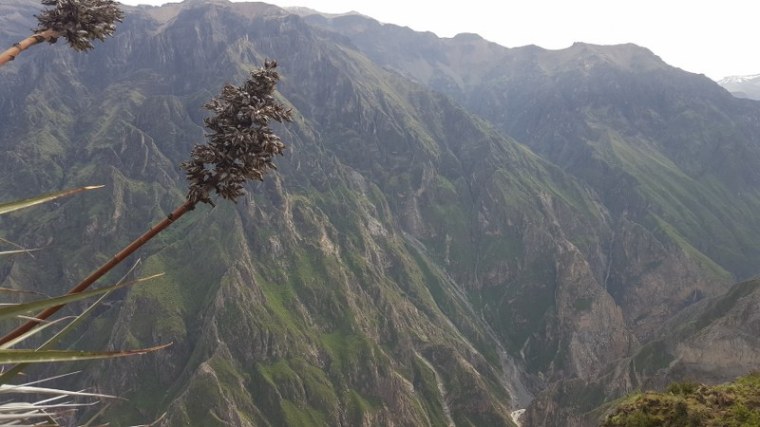
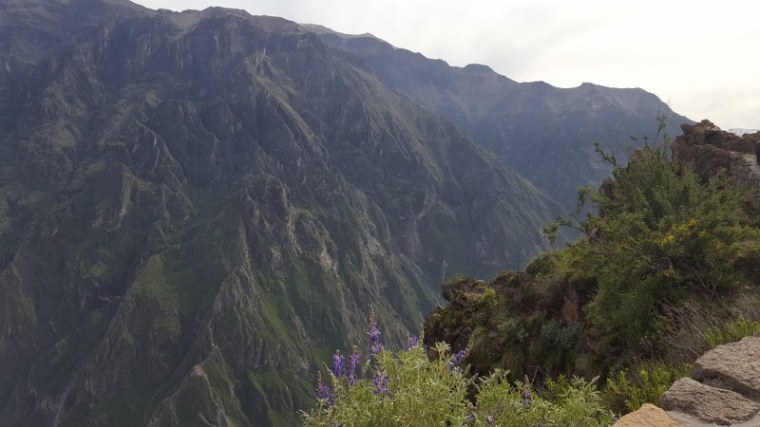
On our drive back we stopped at different sites along the way. The road winds along the canyon and the views are gorgeous. We visited villages along the way. The sides of the canyon have terraces that date back pre-1500 to the time of the Incas. The local people still farm these, some of the larger fields done by modern equipment but I saw plowing done with oxen on some of the smaller ones. Only about 50% of these are farmed now because a lot of the rural people are migrating to the cities searching for a better life and better education.
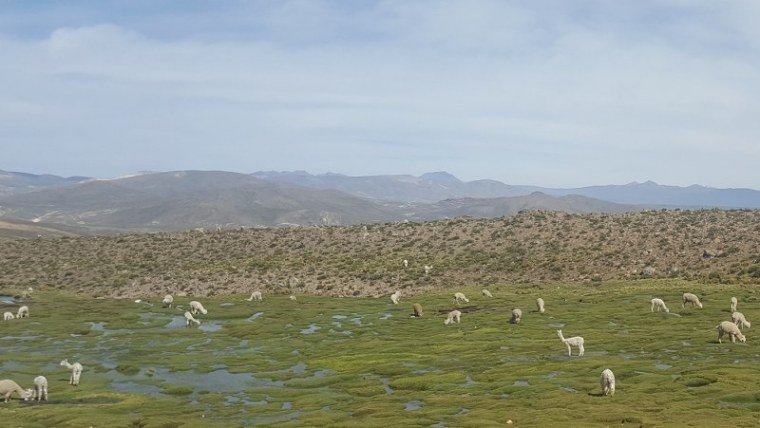
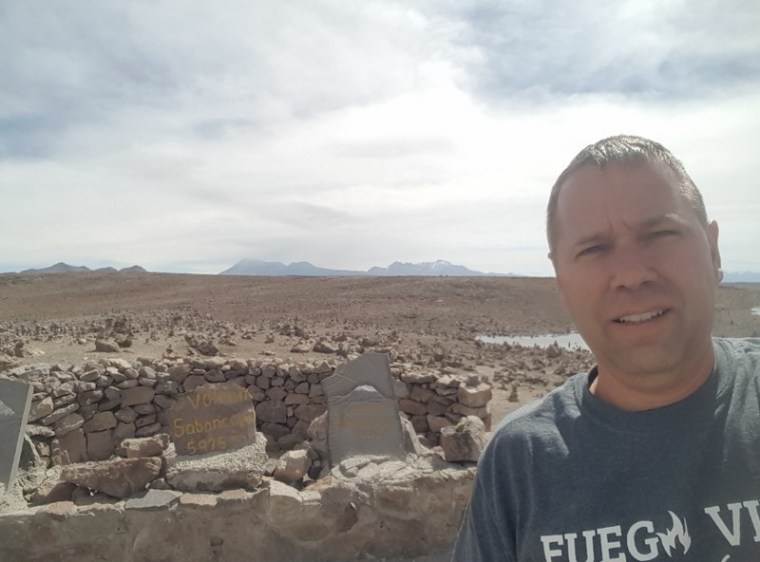
Along the way we saw many sheep, alpacas, and lamas that open range graze in this desert. Crossing the pass in the early morning was cold. There was no heat in the bus and the windows iced over. Even though we are close to the equator it is still cold at 16,110 feet. On our return trip it was warmer. We stopped at the top and the view was incredible. We also saw from a distance the volcano Sabancaya, one of Peru’s most active volcano erupt.
For me it was an incredible day – for Denver not so much. We saw and experienced many things that the hikers did not get to experience. But we didn’t get to experience the hike either, including the sore muscles and blistered feet that they had the following week.
 Stan Schrock Family Serving in Peru